
Irvine Public Records Coverage
Most Irvine open records do not sit at Irvine City Hall. Municipal offices keep contracts, council files, permits, business licenses, campaign filings, and police-report request channels. Orange County is the custodian for recorded property instruments, court files, assessment data, tax bills, local vital certificates, and jail information. California agencies add statewide business, license, custody, privacy, and vital-record systems. The right starting point depends on who created the file and whether the user needs an index entry, an ordinary copy, or a certified copy.
| Irvine record group | Official keeper | Online route | Practical access |
|---|---|---|---|
| City contracts, permits, licenses | City of Irvine | Quick Records and city portals | Search online or send a city request |
| Deeds, liens, maps | Orange County Clerk-Recorder | RecorderWorks, 1982 to present | Free index; copies through cart, mail, or office |
| Civil and other court cases | Orange County Superior Court | Separate portals by case type | Current data online; older indexes at Justice Centers |
| Property values and tax bills | County Assessor and Treasurer-Tax Collector | APN and tax-bill portals | No assessor owner-name search online |
| Birth, death, marriage | County Clerk-Recorder and CDPH | Order intake and state forms | Authorized or informational copy rules apply |
| Custody and registries | OC Sheriff, CDCR, California DOJ | Agency lookup tools | Limited public fields, not full case files |
Public does not always mean searchable on the web. A court index may be open at a courthouse but absent online. A vital record may support an informational copy while a certified identity copy stays restricted. Sealed cases, juvenile and adoption matters, protected addresses, full voter affidavits, and confidential marriage records remain outside ordinary public access.
Irvine Deed Records in RecorderWorks
The Orange County Clerk-Recorder's RecorderWorks index is the main online route to recorded Irvine deeds, trust deeds, liens, reconveyances, judgments, powers of attorney, maps, and notices. Its visible date range began January 4, 1982 when inspected. Earlier work belongs at the recorder office or Orange County Archives. An index identifies a filing; it is not the same as the document image. A selected record can be placed in the shopping cart when a copy is needed.
| RecorderWorks field | Input | Use |
|---|---|---|
| Name role | All, grantor, grantee, or both | Limits the party's role in a transfer |
| Person or business | Last name first; partial first name allowed | Finds a party while reducing timeouts |
| Date range | From and to dates | Narrows a common name |
| Document details | Number, book/page, type, recording date | Targets a known filing |
| Land details | APN, map, legal description | Connects a parcel to recorded instruments |
A useful local shortcut appears after a good match. Open a document number, then select the desired name from the left menu. RecorderWorks can list all documents tied to that person by type and recording date from 1982 onward. This is more precise than repeating a broad name query, especially when Irvine records contain spelling variants or business names.
Note: Grantor usually means the party transferring an interest, while grantee means the party receiving it.
Irvine Property Records Need Two Portals
The Orange County Assessor secured-property portal accepts an eight-digit assessor parcel number, or APN. It does not permit an owner-name search and does not show owner names online. That limit is a defining Irvine records quirk. Public property data exists, yet the web portal is not an owner directory. The online data also reflects the annual assessment roll, so later changes may not appear right away.
Use RecorderWorks for a grantor or grantee name. Use the assessor portal to confirm parcel and value context. The Treasurer-Tax Collector adds secured, unsecured, and supplemental bill searches, including business-name searching. For more current assessment information, the Assessor directs users to its Public Service Counter at 500 S. Main Street, second floor, Orange, open weekdays from 8 a.m. to 5 p.m.
Online access myth. Orange County property data is public, but the assessor deliberately withholds owner-name searching and owner names from its online results.
Irvine Public Records Custodians
Three contact points solve many access problems. The city office routes municipal and public-safety requests. The Clerk-Recorder handles official property filings and Orange County certificates. Irvine Police maintains its own report process, with some releases subject to detective approval. Court, assessment, tax, election, and sheriff records still go to their separate county custodians.
City Records and Information
Non-public-safety city files and Quick Records help
949-724-6281
irvinequickrec@cityofirvine.org
Orange County Clerk-Recorder
601 N. Ross Street, Santa Ana, CA 92701
714-834-2500
Irvine Police Records
Online or Business Desk report requests
949-724-7000
Some reports cannot be released the same day.
The City of Irvine separates non-public-safety records, public-safety material, and police reports. That routing matters. A broad request sent to the wrong unit can slow the response, while a focused request naming the record type, date range, subject, and likely department gives staff a workable search.
Irvine Court Records Online and Off
Orange County Superior Court records span 1889 to the present, but online coverage is narrower. Unlimited and complex civil summaries and registers reach back to 1996, limited civil data to 2005, and many filings after January 1, 2008 can be downloaded for a fee. Older indexes remain at the relevant Justice Centers. The official record is the court file, not the web summary. Copies cost 50 cents per page, with added certification fees.
The Orange County civil case access screen shows the terms gate and explains the online coverage.
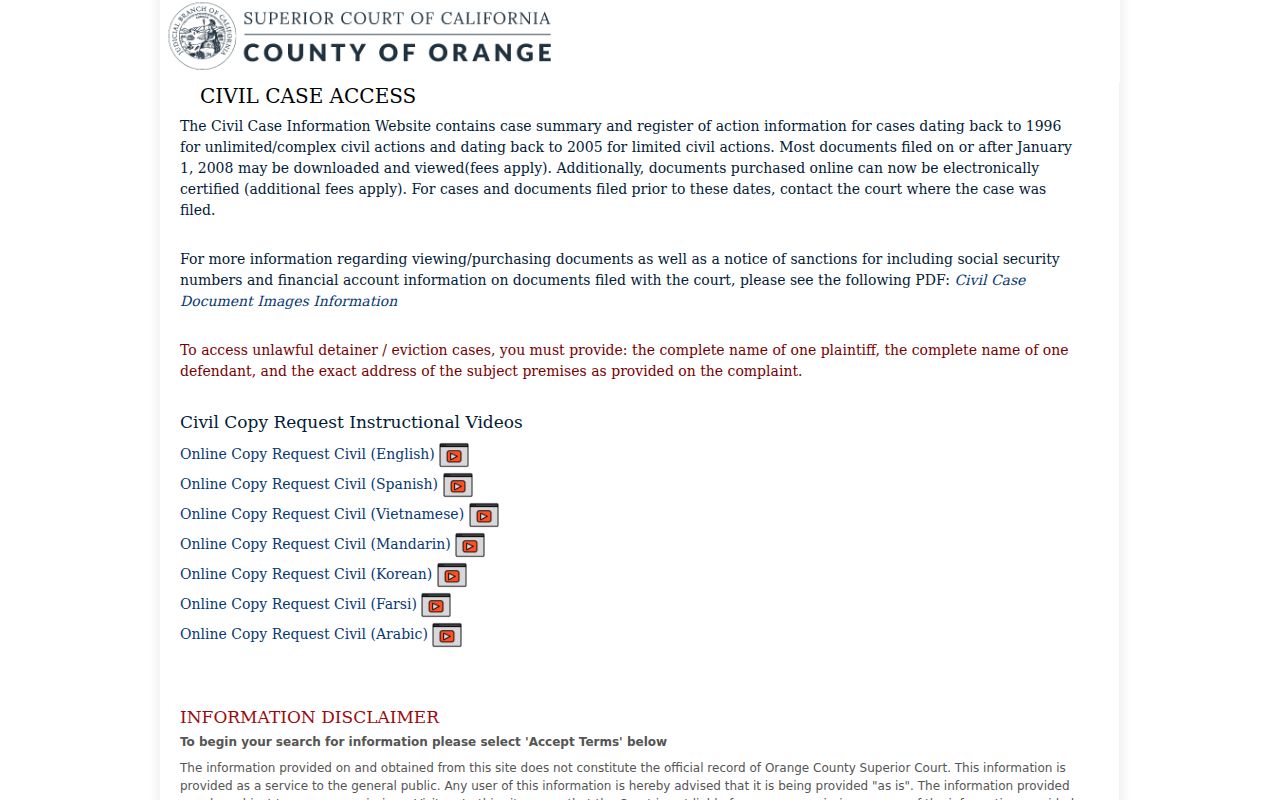
That portal can return a case summary, party names, filing date, case category, and register of actions. A register of actions is the dated list of events and filings in a case. The court also publishes a separate criminal and traffic case search for public case data.
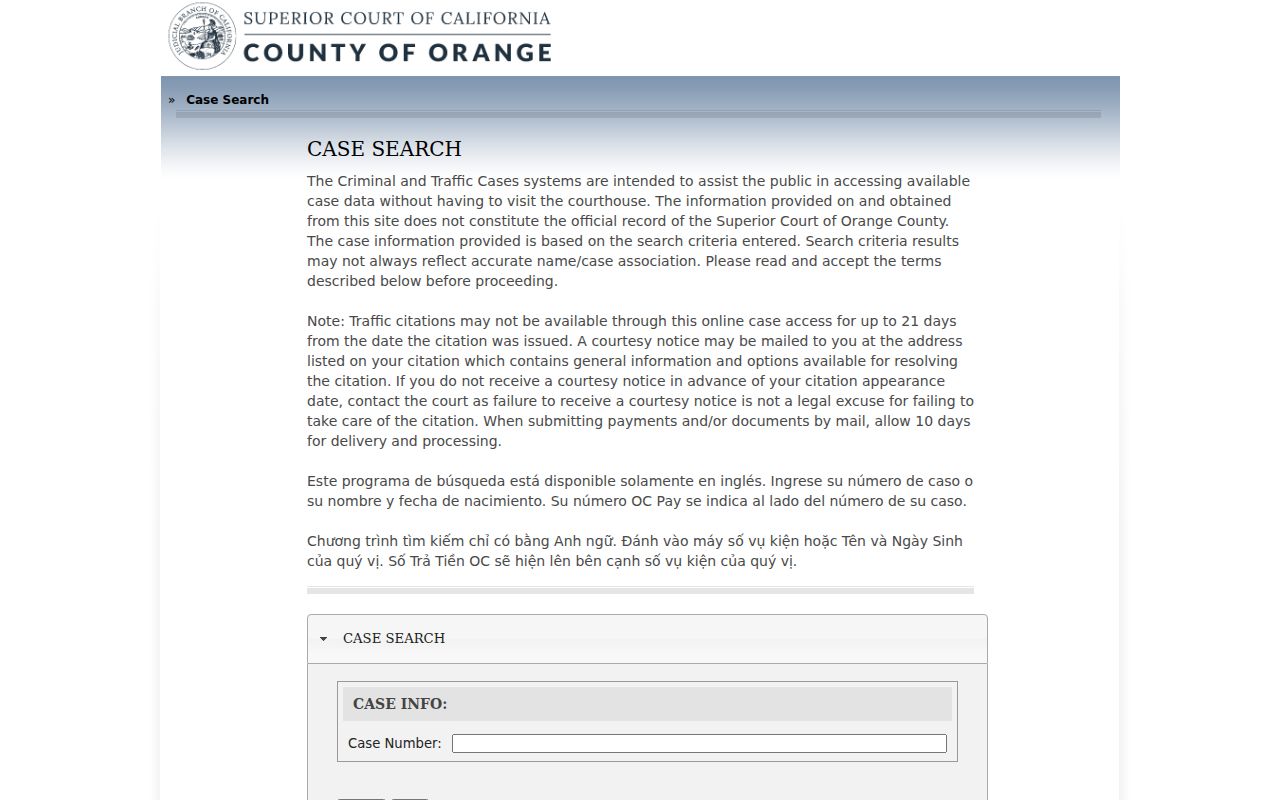
Its warning is important: online data is not an official record, and a name-to-case association may be wrong. Family, juvenile, sealed, adoption, mental-health, and other confidential matters have added limits. For an older file, contact the filing Justice Center before visiting because off-site retrieval may take several days.
Irvine Vital Records Copy Rules
Orange County Clerk-Recorder issues birth, death, and marriage certificates for events in Orange County. California Health and Safety Code section 103526 divides many requests into authorized and informational copies. An authorized certified copy is limited to specified people, such as the person named and qualifying relatives or representatives. An informational copy may be available to others, but it is marked as not valid to establish identity. Public marriage licenses become open records. Confidential marriage certificates are limited to the spouses or a court order.
The Orange County vital-records service page lists application and office requirements.
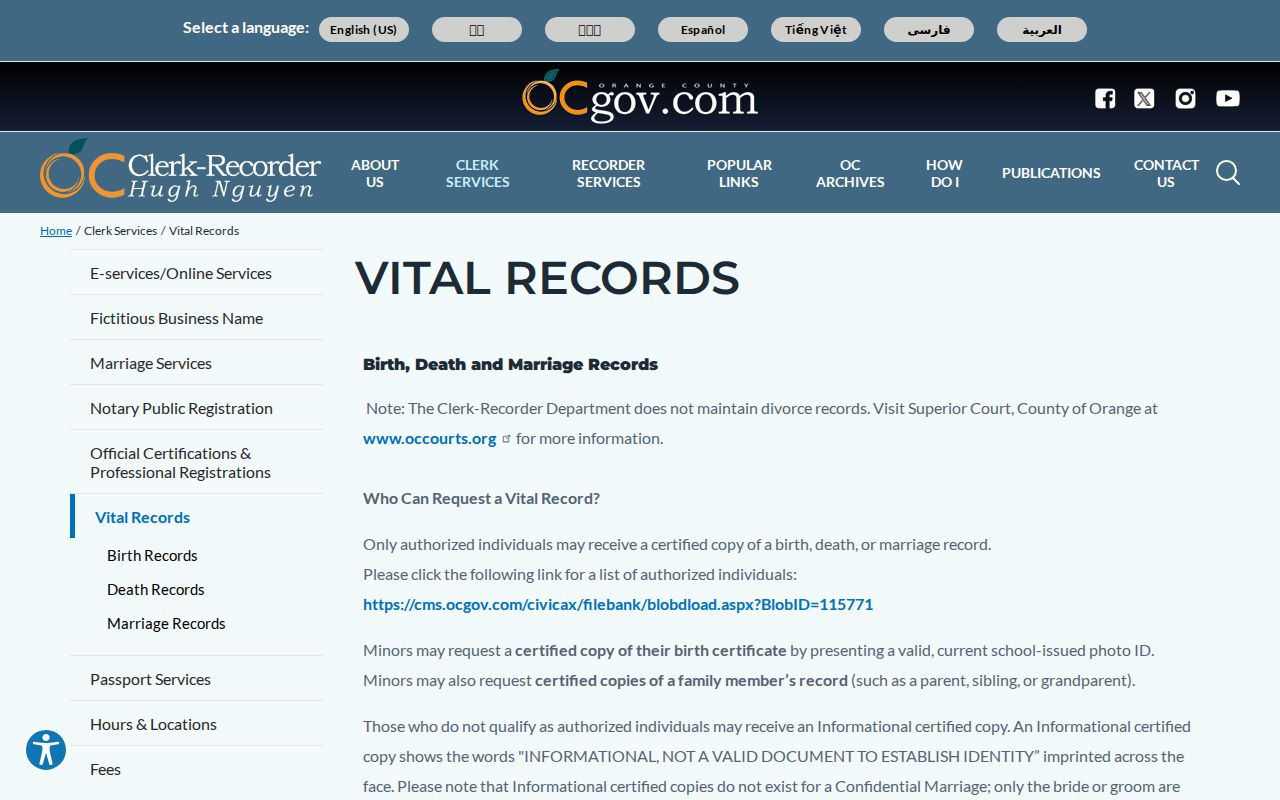
For in-person service, applicants complete the application before the visit and bring valid government photo identification. Certificates are generally available the same day at the central office during its weekday hours. The county's Vitals Ordering workflow starts the certificate request online.
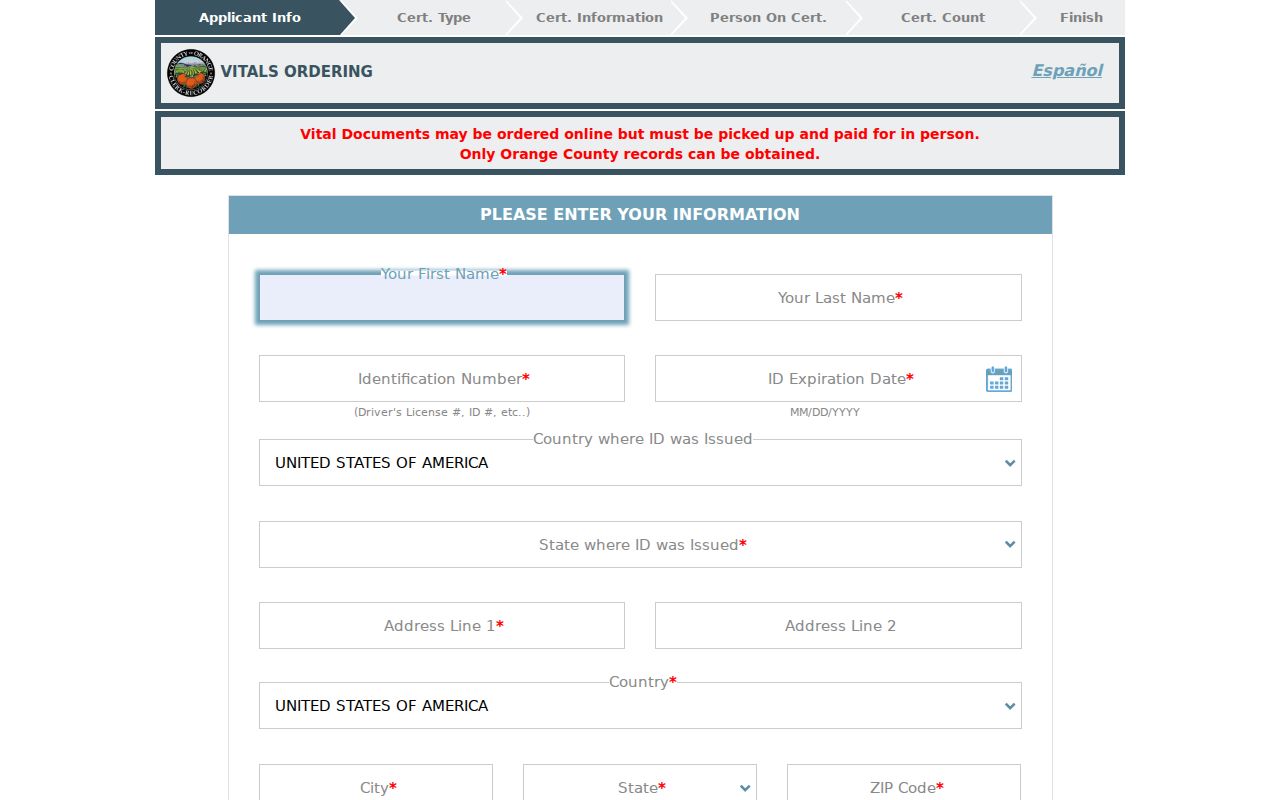
The steps collect applicant information, certificate type, record details, the person named, and copy count. It is intake only. Orange County records must be picked up and paid for in person. Statewide requests use CDPH applications instead.
Irvine Custody Records and Registries
Custody tools answer narrow questions. They are not substitutes for a court file or a full criminal history. The Orange County Sheriff's Inmate Information System provides current inmate information and a booking log, but its current version does not show charges. CDCR's statewide CIRIS tool covers current state custody and can return a name, CDCR number, age, location, commitment county, admission date, and parole-hearing information.
The Sheriff's Inmate Information System page explains the current online limit.
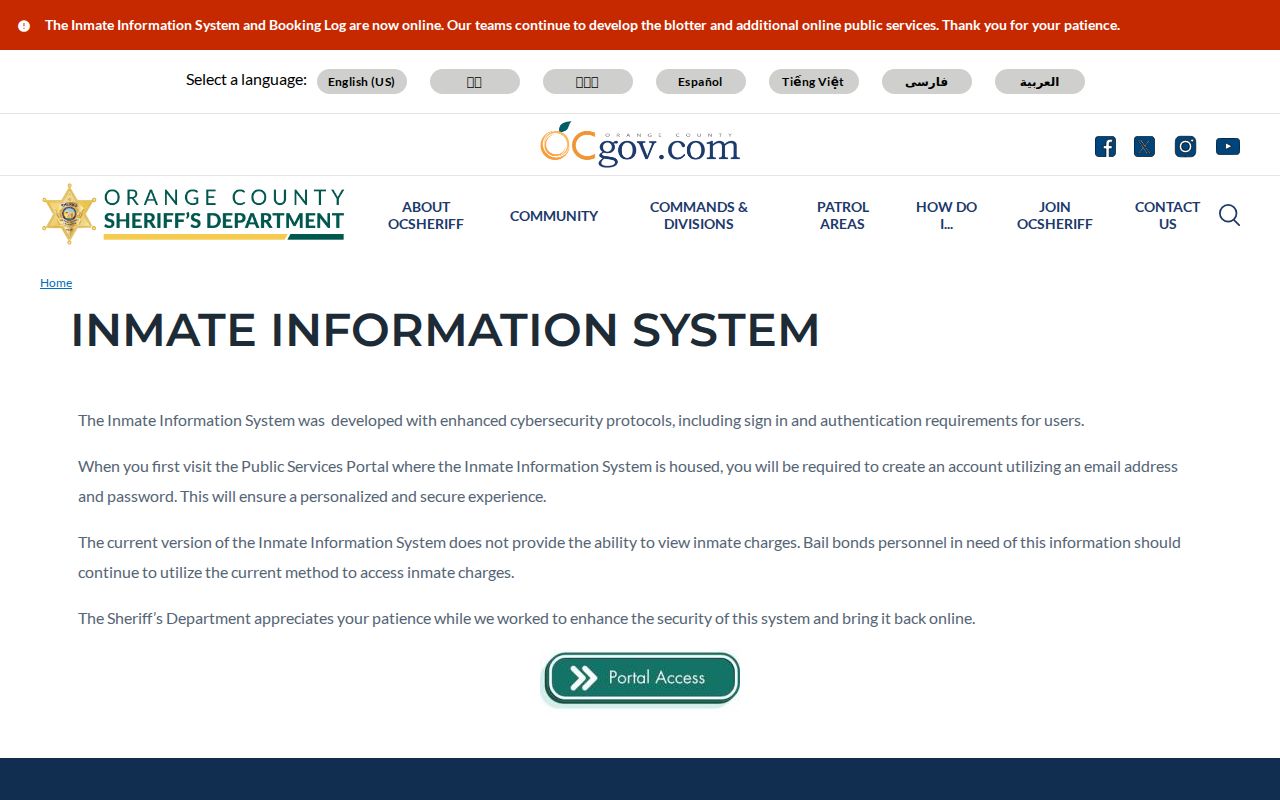
A missing charge does not mean there was none. The record set simply omits that field, so a court case or authorized report request may be the next official source. California DOJ's Megan's Law registry displays only registrants whose information may legally be disclosed.
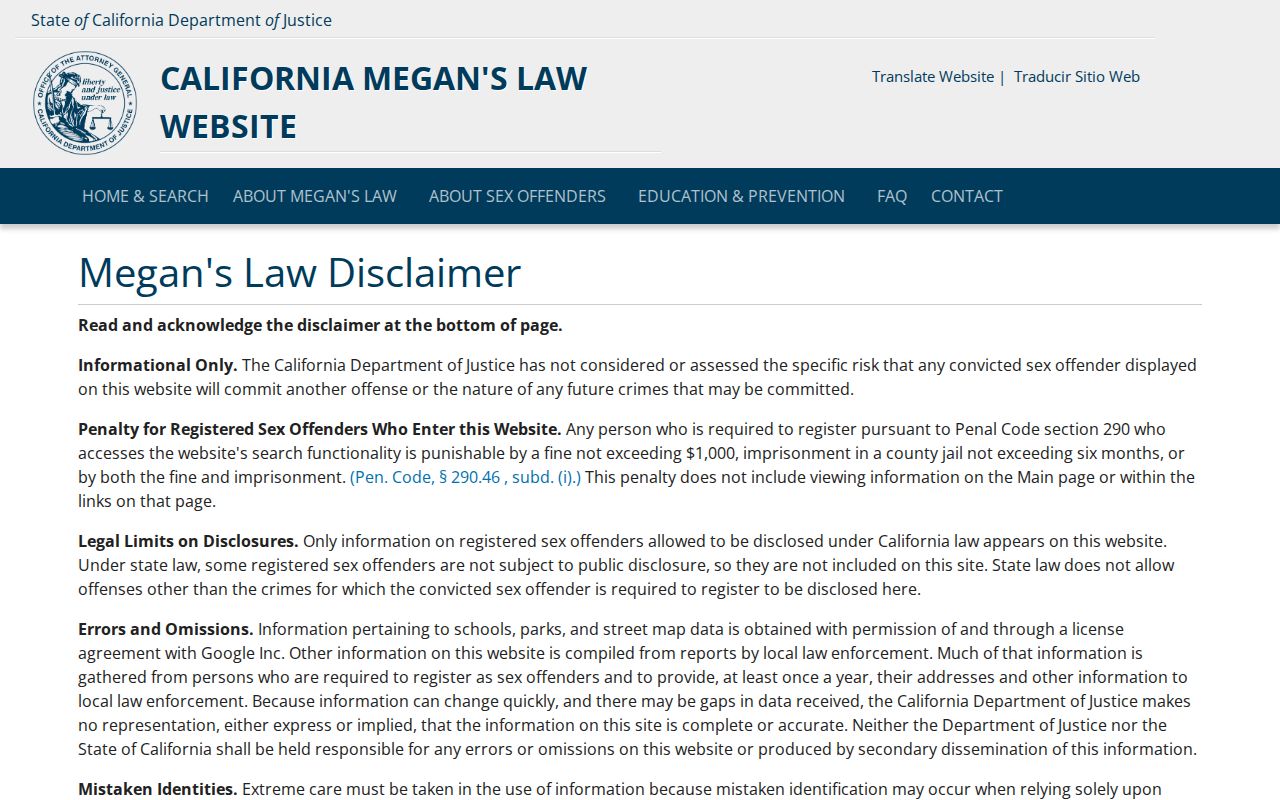
Law enforcement updates the registry daily, but some registrants do not appear because state law limits disclosure. Registry information is for public safety awareness and must never be used to threaten or harass anyone.
Older Irvine Records Stay Offline
Irvine incorporated in 1971, while Orange County was formed in 1889. That history explains why older local evidence often lives in county collections, not a long Irvine municipal archive. RecorderWorks begins in 1982. The portal's index-book and fiche workflow reflects the older finding aids behind the modern screen. Orange County court records reach 1889, yet prior-year indexes must still be checked at Justice Centers.
The Orange County Archives is the offline fallback for historic property documents, vital records, and county-government materials. It assists genealogists, property researchers, students, and local historians. Pre-1982 deed work may require an index book, fiche cell, staff help, or an office copy request. Records predating the county's creation may lead into Los Angeles County-era groups or the California State Archives.
Online access is a convenience layer, not the full historical boundary. A blank portal result can mean the year is outside web coverage rather than the record never existed.
California Limits on Irvine Records
The California Public Records Act, Government Code division 10, sections 7920.000 through 7931.000, starts from access but preserves other confidentiality laws. It does not unlock sealed cases, juvenile files, adoption records, protected victim data, many investigatory records, full voter affidavits, DMV personal data, or actual addresses protected by Safe at Home. The distinction is vital: a government record can exist without being open to every requester.
Voter registration is especially narrow. My Voter Status is a voter-facing authentication tool, while voter-file access is limited to approved election, scholarly, journalistic, political, or governmental purposes. The dedicated Irvine voter registration resource covers that controlled record set without treating it as an open resident directory.
A denial should identify the exemption being used. When only part of a record is protected, an agency may redact the closed material and release the rest. Redaction means masking protected text while preserving disclosable content.
Irvine Records and DROP Privacy
Government access and broker privacy are separate systems. California's Data Broker Registry and DROP platform let residents send one deletion request to active registered data brokers. DROP opened to residents on January 1, 2026, and brokers must begin processing requests on August 1, 2026. Under the regulations, brokers must retrieve and process requests at least every 45 days and report status.
DROP does not erase an Irvine deed, court entry, or other government file that remains lawfully open. It addresses brokered copies and profiles built from many sources. Safe at Home works differently by supplying eligible participants with a substitute mailing address accepted by government agencies. Neither program is a reason to try to uncover a protected person's actual address.
Irvine Records Terms Decoded
Office language signals what a requester will receive. Understanding four terms prevents a paid copy from being mistaken for proof that carries official certification.
- Index
- A searchable list of filings and key details, not necessarily the full document image.
- Certified copy
- A copy authenticated by the custodian for an official purpose, often with an added fee and eligibility rule.
- Custodian
- The agency or office responsible for keeping and responding for a particular record set.
- Exemption
- A legal basis that permits or requires an agency to withhold all or part of a record.
A portal summary is often enough for a date or case-number check. Estate work, a formal filing, or a disputed fact may call for the image or a certified copy from the custodian.
Request Irvine Open Records
Any person may ask the City of Irvine to inspect or copy a non-exempt city record. Under the California Public Records Act, an agency generally has 10 days to determine whether it holds disclosable records, with a limited 14-day extension. That is a determination deadline, not always the production date. Agencies may charge direct duplication costs and, in some cases, the cost of electronic extraction or programming.
- Name the custodian. Send city files to Irvine, deeds to the Clerk-Recorder, court files to the court, and assessment data to the Assessor.
- Check the index. Search the official portal first and save any document, case, permit, or parcel number that identifies the item.
- Describe the record. Give a focused subject, date range, record type, known names, and the format desired. Ask for inspection if a copy is not needed.
- Review costs and limits. Clarify copy, certification, retrieval, or extraction charges before staff proceeds with a large request.
- Refine or challenge. If the response is too broad, narrow it. If access is denied, ask for the cited exemption and seek appropriate review.
State access guidance explains the determination period and direct duplication standard. City police reports and county sheriff reports use their own request routes, and release can depend on the requester's role and the status of an investigation.
Lawful personal use. Use Irvine records for legitimate research, civic oversight, family history, estate matters, or consumer safety. Never use a record to stalk, harass, threaten, or expose a protected person.